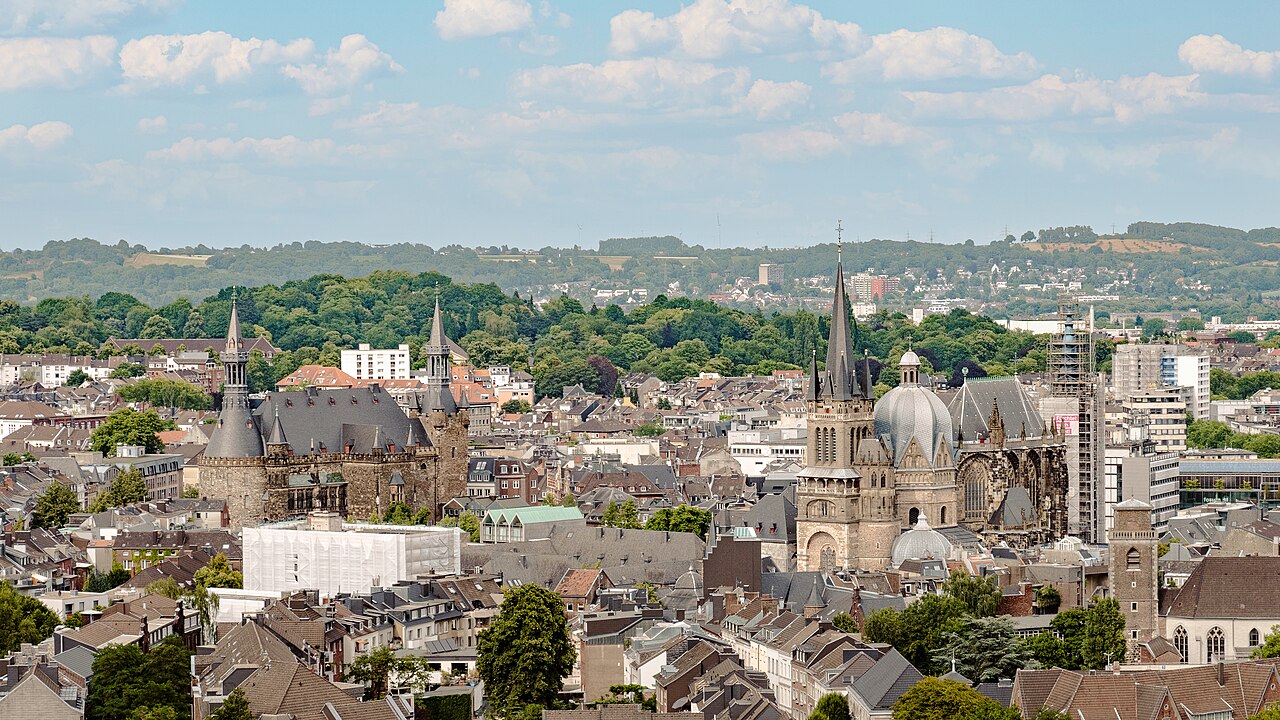
Aachen & Rote Karte: Uncovering the Missing Link
The search term "Aachen Rote Karte" presents an intriguing puzzle. On one hand, we have Aachen, a German city steeped in millennia of history, the ancient capital of Charlemagne, and a vibrant European hub. On the other, "Rote Karte" – German for "red card" – immediately conjures images of football pitches, high-stakes decisions, and sporting drama. The juxtaposition begs the question: What is the connection? Is there a lost historical incident, a local sporting legend, or perhaps a unique cultural reference that links this illustrious city with the infamous red card?
Based on extensive historical and geographical records, including the foundational insights provided, a direct, widely documented link between "Aachen" and a specific, singular "Rote Karte" incident appears elusive. The reference context itself explicitly states that the phrase "aachen rote karte" was not found in descriptions of the city. While a red card incident featuring a player named Dhari Al Enezi from an Al Fateh vs. Damac match is mentioned in one source, it bears no connection to Aachen whatsoever.
This "missing link" is precisely what makes the query fascinating. It invites us to delve deeper into both the city's rich tapestry and the various ways such a specific phrase might enter popular search discourse. Could it be a local football club's dramatic match, a misunderstanding, or a metaphorical use of the term? While the historical records provided do not yield an immediate answer, let's explore the possibilities and, more importantly, discover why Aachen is a city well worth knowing, even without a notorious red card tale.
Decoding "Aachen Rote Karte": The Enigma Explained
To truly understand the "Aachen Rote Karte" query, we must first dissect its components. "Aachen" is Germany's westernmost city, nestled in the "Euregio" at the crossroads of Germany, the Netherlands, and Belgium. Its significance is immense, dating back to Roman times when its hot mineral springs were first appreciated. It gained unparalleled prominence as the favored residence of Charlemagne, who established it as the capital of his vast Carolingian Empire in the Dark Ages. Today, it's a diverse university city, celebrated for its international flair and its stunning UNESCO World Heritage site, the Aachen Cathedral.
"Rote Karte," on the other hand, is a universal symbol in many sports, most notably football, indicating a player's immediate expulsion from the game for a serious foul or misconduct. It's a moment of high drama, controversy, and often, significant consequence for the team involved. The reference to Dhari Al Enezi receiving a red card in an Al Fateh vs. Damac match underscores this typical sporting context, completely removed from any historical or geographical ties to Aachen.
So, why the search for "Aachen Rote Karte"? One plausible theory is a hyper-local sports event. Perhaps a pivotal match involving Alemannia Aachen, the city's popular football club, featured a controversial red card incident that became a talking point among fans. Such an event might not make it into broad historical texts but could certainly be a significant local memory. Another possibility is a metaphorical usage – perhaps a local political decision seen as a "red card" to certain developments, or even a student prank or artistic statement that adopted the symbolism of expulsion. Without further context, the "missing link" remains a captivating mystery, suggesting that some stories are best found not in ancient archives, but in contemporary local narratives. For more in-depth research into this intriguing search term, you might want to consider Exploring Aachen: Where is the 'Rote Karte' Story?.
Aachen: A City of Emperors, Innovation, and European Unity
While the red card mystery may persist, Aachen's own story is anything but a blank slate. It's a narrative rich with power, piety, and progress, making it a compelling destination for any history enthusiast or European traveler. The city's roots trace back to Roman admiration for its therapeutic hot springs, which offered solace from the turbulent Germanic tribes beyond the Rhine.
The true heart of Aachen's historical significance lies with Charlemagne. In 748 AD, this Dark Age King, who would become the first Emperor of the Holy Roman Empire, chose Aachen as his capital. He established an impressive palace complex, of which the magnificent Aachen Cathedral (Aachener Dom) stands as a testament to his vision. Built between 793 AD and 813 AD, its central octagonal dome remarkably survives intact since the Dark Ages – a true marvel of early medieval engineering. The Cathedral became Charlemagne's burial place in 814 AD and subsequently served as the coronation site for German Kings for centuries, further solidifying Aachen's place in European history. The site of today's picturesque Town Hall (Rathaus) was once part of Charlemagne's residence, completing the imperial complex that laid foundations for modern Europe.
Despite significant destruction from a great fire in 1656 and World War II bombings, Aachen has meticulously preserved the charm and atmosphere of its "Altstadt" (historic center). Its winding streets invite exploration, leading visitors through centuries of history embodied in its architecture and monuments. Today, Aachen thrives as a welcoming university city, fostering diversity and innovation. Its strategic location in the Euregio, bridging Germany, Holland, and Belgium, makes it a potent symbol of European integration, where national boundaries increasingly give way to a shared European identity.
Practical Tip: When visiting Aachen, don't miss the Aachen Cathedral, a UNESCO World Heritage site that embodies the city's historical grandeur. Afterwards, explore the Altstadt and the Rathaus, which stands on the foundations of Charlemagne's palace. Consider a guided tour to fully appreciate the intricate history.
Beyond the Red Card: Aachen's Sporting & Cultural Vibrancy
Even without a prominent "rote karte" incident in its historical records, Aachen is far from lacking in sporting excitement or cultural dynamism. The city boasts a passionate local sports scene, particularly around its football club, Alemannia Aachen. While they may not always play in the top national leagues, their matches are fiercely supported, and local derbies can be intense affairs where metaphorical (and sometimes literal) "red card moments" are commonplace for fans.
Beyond football, Aachen is internationally renowned for equestrian sports, hosting the annual CHIO Aachen – a prestigious international horse show that attracts top riders and thousands of spectators from around the globe. This event is a jewel in Aachen's cultural crown, showcasing world-class athleticism and local pride. Other sports, from handball to ice hockey, also have a dedicated following.
Culturally, Aachen is a melting pot. As a major university city, it's infused with youthful energy and a vibrant arts scene. Throughout the year, festivals, concerts, and theatrical performances fill its calendar. The famous Aachen Carnival is a lively celebration, transforming the city into a hub of parades, costumes, and joyous revelry. It's in these local, everyday happenings – the roar of the crowd at a football match, the thrill of a horse show, the spontaneous joy of Carnival – that the true spirit of Aachen shines, offering a richness that extends far beyond any single "red card" narrative. For further reading on the city's comprehensive past, you can check out Aachen's Rich History: No 'Red Card' Incidents Found.
Actionable Advice: If you're interested in the sporting aspect, check the schedule for Alemannia Aachen during your visit. For a taste of local culture, explore the numerous cafes and pubs in the Altstadt, particularly around the Pontviertel district, popular with students and offering a lively atmosphere.
Practical Insights for the Curious Explorer
For those drawn to Aachen, whether by the intrigue of a "rote karte" or its undeniable historical charm, the city offers a wealth of experiences:
- Getting There: Aachen is easily accessible by train from major German cities like Cologne, Düsseldorf, and Frankfurt, as well as from Brussels and Liège. Its central European location makes it a convenient stop on any multi-country itinerary.
- Must-See Attractions:
- Aachen Cathedral (Aachener Dom): UNESCO World Heritage site, Charlemagne's burial place, and a masterpiece of medieval architecture.
- Aachen Rathaus (Town Hall): Built on Charlemagne's palace complex, it offers a glimpse into imperial power.
- Elisenbrunnen: A neoclassical structure housing Aachen's famous thermal springs, a reminder of its Roman origins.
- Pontviertel: The lively student quarter, perfect for dining, drinks, and soaking in the local atmosphere.
- Culinary Delights: Don't leave Aachen without trying "Aachener Printen," a unique type of gingerbread often called Aachen's edible trademark.
- Border Experience: Take advantage of Aachen's unique location. Day trips to Maastricht in the Netherlands or Liège in Belgium are incredibly easy and offer a taste of neighboring cultures.
- Investigating the "Rote Karte": If you're genuinely determined to find a "rote karte" story connected to Aachen, your best bet is to delve into local sports archives, specifically those of Alemannia Aachen football club, or local newspaper archives. It's often in these localized records that specific incidents, not making international headlines, are preserved.
Conclusion
The quest for the "Aachen Rote Karte" reveals that while a definitive, singular incident remains undocumented in major historical accounts, the query itself serves as a gateway to discovering a truly remarkable European city. Aachen's narrative is far richer than any single sporting event, steeped in the legacy of Charlemagne, Roman heritage, and its modern role as a symbol of European unity. It's a city where ancient history breathes alongside contemporary vibrancy, a place where hot springs soothe, and cultural diversity thrives.
So, even if the "missing link" of a specific red card story remains elusive, Aachen offers an abundance of other captivating tales, architectural wonders, and cultural experiences. Its true "value" lies not in a moment of sporting drama, but in its profound historical significance and its enduring spirit at the heart of Europe. We invite you to explore this ancient capital and uncover its countless treasures for yourself.