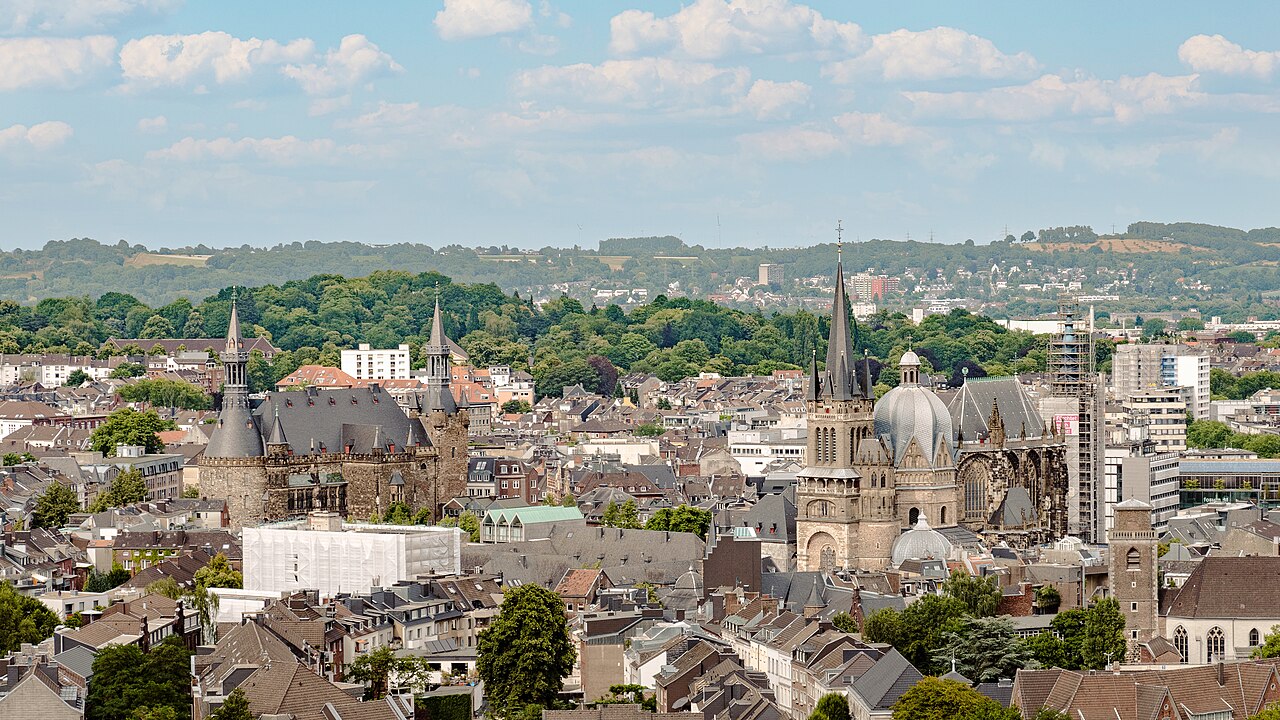
Aachen: An Ancient Capital's Untarnished History – No 'Red Card' Incidents Found
Aachen, a city nestled at the crossroads of Germany, Belgium, and the Netherlands, boasts a history so profound and layered that it feels as though every cobbled street and ancient stone whispers tales of emperors, kings, and pilgrims. From its Roman origins to its pivotal role in shaping medieval Europe, Aachen's narrative is one of enduring significance and cultural richness. Yet, for those specifically searching for "aachen rote karte" – implying a major historical penalty, expulsion, or a defining negative turning point – the city's extensive records offer a surprising lack of such a definitive 'red card' moment.
This article delves into the fascinating tapestry of Aachen's past, exploring why a direct historical "red card" event remains elusive, and what truly defines this remarkable European gem. We'll uncover its resilience, its capacity for rebirth, and the continuous thread of importance that has woven through its centuries, far outweighing any singular disciplinary event.
Aachen: An Ancient Capital Steeped in European Heritage (and No Red Cards in Sight!)
Located in the heart of the Euregio, Aachen's strategic position has always been a key to its identity. This "most Westerly City" in Germany is not merely a place on a map but a crucible where European integration has quietly eroded national boundaries, fostering a diverse and welcoming atmosphere. Visitors are frequently captivated by its unique blend of ancient history and vibrant university life. The story of Aachen stretches back to, and even beyond, Roman times, painting a picture of continuous development rather than abrupt historical dismissals.
Unlike a football match where a player might receive a "rote karte" (red card) for a serious foul, Aachen's history, while certainly not without conflict or challenging periods, doesn't feature a singular, universally recognized event that equates to a definitive historical 'red card' for the city itself. Its narrative is more akin to a long, complex game marked by periods of triumph, recovery, and evolution.
From Roman Springs to Carolingian Grandeur: A History Without Penalties
Aachen's initial allure for the Romans lay in its hot mineral springs, providing not only therapeutic relief but also a strategic point in their turbulent dealings with Germanic tribes east of the Rhine. These springs set the stage for Aachen's future prominence, drawing significant figures who valued both its natural resources and its strategic location. It was Charlemagne, the formidable Dark Age King, who cemented Aachen's place in history. In 748 AD, he became the first Emperor of the Holy Roman Empire, a vast dominion that laid the groundwork for modern Europe.
Charlemagne, like the Romans before him, found solace in the hot baths and made Aachen the capital of his Carolingian Empire. His "uncompromising approach" and expansionist policies, though controversial at the time, were instrumental in unifying a significant portion of Western Europe. His greatest achievement in Aachen was the establishment of his magnificent palace complex, which included the incomparable Aachen Cathedral (Aachener Dom) and the site of the present-day Town Hall (Rathaus) – his residence and seat of power. While Charlemagne himself might have been a figure of imposing authority, his legacy for Aachen was one of elevation and establishment, not a 'red card' incident for the city. Instead, his vision forged the foundations of a capital that would endure for centuries.
The Enduring Legacy of Aachen Cathedral: A UNESCO Gem
The spiritual heart of Aachen, and indeed one of Europe's most significant architectural marvels, is the Aachen Cathedral. Its central octagonal dome, built by Charlemagne between 793 AD and 813 AD, stands as a testament to Dark Age engineering and artistic ambition. Remarkably, this structure, once the highest construction north of the Alps, has survived completely intact through over a millennium of history. Over the centuries, additional chapels and new wings have been added, creating the awe-inspiring complex we see today.
In 814 AD, the Aachen Dom became Charlemagne's burial place, and subsequently, the coronation site for German Kings, solidifying its role as a pivotal spiritual and political center. It houses remarkable religious relics, drawing pilgrims from across the globe. The Cathedral's survival through various conflicts, including devastating fires and two World Wars, speaks volumes about Aachen's resilience. It stands not as a monument to historical failures or "red card" moments, but as a beacon of enduring faith, power, and architectural genius, symbolizing the city's unbroken historical continuity.
Aachen Through the Ages: Overcoming Challenges, Not Receiving 'Red Cards'
While Aachen may not have a "rote karte" in its historical lexicon, it has certainly faced its share of adversity. A great fire in 1656 devastated much of the city, and later, during World War II, Aachen suffered extensive damage. Yet, through these trials, the city demonstrated an extraordinary capacity for recovery and preservation. Much of its historic center, or "Altstadt," with its winding streets and charming architecture, has been meticulously restored, retaining the atmosphere of its storied past.
This ability to rebuild, adapt, and preserve its identity in the face of destruction is a far cry from a historical "red card." Instead, it highlights Aachen's strength, its community spirit, and its commitment to its heritage. The city has repeatedly proven its ability to rise from the ashes, reinforcing its narrative as a place of continuous renewal and enduring cultural significance rather than one defined by irreversible historical penalties.
What 'Aachen Rote Karte' Might Imply (and What History Really Tells Us)
The query "aachen rote karte" is an interesting one because, as we've established, a direct correlation simply doesn't exist in historical records concerning the city. Those searching for this phrase might be looking for a defining moment of historical controversy, a significant expulsion of a community, a major military defeat that led to lasting shame, or perhaps a symbolic 'penalty' imposed upon the city or its leaders. However, Aachen's history, rich with power shifts, architectural marvels, and cultural exchange, doesn't contain a singular event that fits this exact descriptor.
Instead, Aachen's story is one of consistent strategic importance, imperial grandeur, and a steady evolution into a modern European city. While there were certainly periods of conflict and change – Charlemagne's methods were, at times, uncompromising, and the city suffered significant damage in fires and wars – these events were part of a broader historical flow that Aachen successfully navigated, demonstrating remarkable resilience and a continuous embrace of its European identity. For more in-depth analysis on this specific historical query, you might find valuable insights in Aachen & Rote Karte: Uncovering the Missing Link and Exploring Aachen: Where is the 'Rote Karte' Story?.
Practical Insights for Exploring Aachen's Untarnished Past
For visitors keen to explore Aachen's vibrant history, the absence of a "rote karte" moment allows for an appreciation of a narrative dominated by creation, enduring power, and cultural synthesis. Here are some tips:
- Visit Aachen Cathedral (Aachener Dom): A UNESCO World Heritage site, it's an absolute must-see. Marvel at Charlemagne's octagonal chapel, the opulent Palatine Chapel, and the Domschatzkammer (Treasury) with its priceless relics.
- Explore the Rathaus (Town Hall): Built on the foundations of Charlemagne's palace, the Rathaus offers a glimpse into the city's political past and features impressive frescos depicting scenes from Charlemagne's life.
- Relax at the Thermal Baths: Experience the same healing mineral springs that drew the Romans and Charlemagne to the city. The Carolus Thermen Bad Aachen is a modern spa that continues this ancient tradition.
- Wander the Altstadt: Discover the charm of the Old Town, its narrow alleys, historic fountains, and cozy cafes, absorbing the atmosphere of centuries past.
- Taste Aachener Printen: Don't leave without trying this famous local gingerbread, a sweet tradition with a long history.
Aachen today is a dynamic university city, a hub of innovation, and a living testament to European cooperation. Its past is celebrated, its present is thriving, and its future continues to be shaped by the very European ideals Charlemagne himself unwittingly initiated.
Conclusion
Aachen's rich history is a captivating journey through the heart of Europe, marked by imperial grandeur, architectural brilliance, and remarkable resilience. While the search for "aachen rote karte" might not yield a definitive historical penalty, it underscores a fascinating aspect of the city's narrative: its continuous ability to adapt, rebuild, and flourish without a singular, universally recognized 'red card' event. Instead, Aachen offers a story of enduring significance, from its Roman thermal springs to its Carolingian legacy and its modern role as a vibrant European hub. Its past is a testament to perseverance and cultural wealth, inviting every visitor to discover its multifaceted, untarnished history.