Exploring Aachen: Where is the 'Rote Karte' Story?
Aachen, a city steeped in millennia of history, often evokes images of grand emperors, sacred cathedrals, and bubbling thermal springs. It’s a place where Roman legacy meets Carolingian grandeur, nestled at the very heart of Europe. Yet, a curious search term sometimes surfaces, sparking intrigue: "aachen rote karte". For those delving into Aachen’s rich tapestry of past events, the mention of a 'red card' might seem a peculiar fit. Is there a dramatic historical incident, a local legend, or perhaps a significant sporting moment connected to this ancient capital? Let’s explore this intriguing query and uncover what Aachen truly has to offer.
Unpacking the 'Rote Karte' Mystery
First, let's clarify what 'Rote Karte' typically signifies. In German, 'Rote Karte' translates directly to 'red card', a term predominantly associated with sports, particularly football (soccer). It's a disciplinary measure used by referees to eject a player from a match for serious infractions. When searching for "aachen rote karte", one might naturally assume a connection to a specific, perhaps controversial, sporting event that gained notoriety in the city. However, delving into the vast historical records, cultural narratives, and even local anecdotes of Aachen, a prominent or historically significant 'red card' incident tied to the city's main identity remains conspicuously absent.
The only explicit mention of "Rote Karte" in the provided context refers to a football match between "Al Fateh – Damac" where Dhari Al Enezi received one – an event entirely unrelated to the city of Aachen itself. This suggests that while the term 'Rote Karte' is well-understood, its direct historical or cultural link to Aachen in a widely recognized context appears to be a misconception or a query stemming from a different, perhaps very localized or recent, sporting event that hasn't permeated the city's broader historical narrative. In essence, if you're looking for a dramatic 'red card' story woven into the historical fabric of Aachen, you might be looking for something that simply isn't there, at least not in a way that defines the city's rich heritage. To fully understand this intriguing absence, you might be interested in reading Aachen & Rote Karte: Uncovering the Missing Link for a deeper dive into this enigma.
Aachen: An Ancient Capital at the Heart of Europe
While the 'red card' mystery might lead to a dead end, Aachen itself is anything but. This German city, nestled in North Rhine-Westphalia, proudly stands as Germany’s most westerly city, bordering both the Netherlands and Belgium. Its unique location in the "Euregio" beautifully illustrates how European integration is subtly eroding the significance of national boundaries, making it a truly international hub.
A Glimpse into Aachen's Storied Past
- Roman Origins: Aachen's appeal began with the Romans, who discovered and cherished its hot mineral springs. These thermal waters offered a welcome respite and strategic advantage against the often-turbulent Germanic tribes to the east of the Rhine. The city's very name, "Aachen," is thought to derive from the Old German "Ahha," meaning water, a testament to its aquatic legacy.
- Charlemagne's Capital: The city's fame truly soared under Charlemagne, the Dark Age King who, in 748 AD, became the first Emperor of the Holy Roman Empire. Much like the Romans, Charlemagne reveled in the city's hot baths and made the pivotal decision to establish Aachen as the capital of his vast Carolingian Empire. He is often credited with laying the foundational stones for modern-day Europe, albeit through expansionist policies that were controversial in their time.
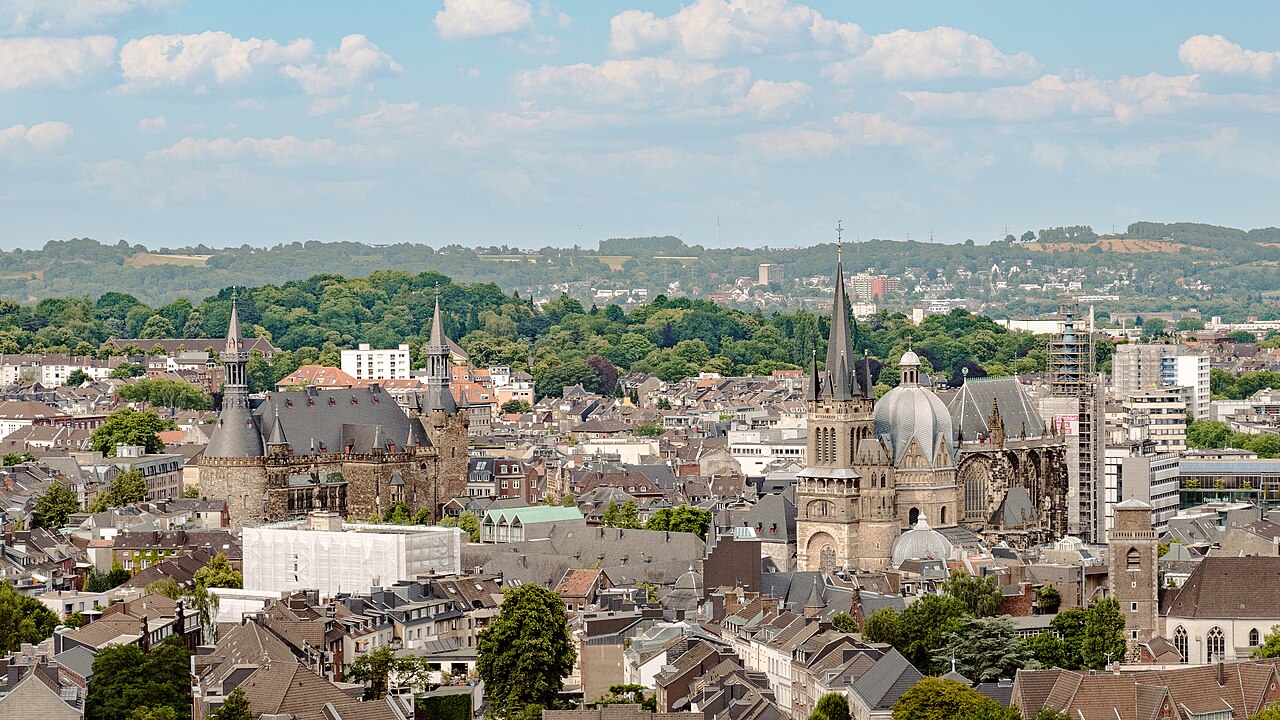
- The Aachen Cathedral (Aachener Dom): Charlemagne's greatest achievement in Aachen was undoubtedly the establishment of his palace complex, which included the magnificent Aachen Cathedral. Built between 793 AD and 813 AD, its central octagonal dome, once the highest construction north of the Alps, has remarkably survived intact since the Dark Ages. This UNESCO World Heritage site became Charlemagne's burial place in 814 AD and later the coronation site for German Kings for centuries. It houses unique religious relics and remains a significant pilgrimage site.
- The Rathaus: The site of the present-day Town Hall (Rathaus) was also part of Charlemagne’s original palace complex, serving as his residence and the seat of his power. Though much of Aachen was ravaged by a great fire in 1656 and later by WWII, the city has painstakingly preserved much of the history and atmosphere of its "Altstadt" or historic centre.
Aachen's history is a compelling narrative of power, faith, and European identity. It's a city where every cobbled street and ancient stone whispers tales of emperors, pilgrims, and scholars. For more about the city's enduring legacy, you might want to explore Aachen's Rich History: No 'Red Card' Incidents Found.
Beyond the 'Red Card' Enigma: Exploring Modern Aachen
While the search for an "aachen rote karte" incident might be fruitless, the journey of discovering Aachen itself is incredibly rewarding. Today, Aachen is a vibrant university city, blending its ancient past with a dynamic, youthful present. Visitors are often pleasantly surprised by its diverse and welcoming atmosphere.
What can you expect to discover in Aachen?
- Aachen Cathedral (Aachener Dom): This architectural marvel is a must-see. Spend time admiring its unique octagonal design, the intricate mosaics, and the shrine of Charlemagne. It's not just a church; it's a living piece of European history.
- The Rathaus (Town Hall): Standing proudly on the market square, the Rathaus offers a glimpse into imperial power, with its impressive façade and historical halls.
- The Old Town (Altstadt): Wander through the charming, winding streets of the Altstadt. Discover quaint shops, traditional bakeries selling Aachener Printen (a local spiced biscuit), and cozy cafes. The atmosphere is undeniably European and inviting.
- Thermal Baths: Revisit Aachen's Roman roots by indulging in its famous thermal springs. The Carolus Thermen spa offers a modern take on ancient relaxation, providing therapeutic mineral waters that have soothed visitors for millennia.
- University Flair: With RWTH Aachen University, one of Germany's leading technical universities, the city hums with intellectual energy. This creates a lively student scene, diverse cultural offerings, and a cosmopolitan feel.
- Cross-Border Experience: Take advantage of Aachen's unique location. Day trips to nearby cities in Belgium (like Liège) or the Netherlands (like Maastricht) are incredibly easy, offering a truly international travel experience.
Practical Tips for Your Aachen Adventure
Planning a trip to Aachen promises a journey through history and culture. Here are a few tips to enhance your visit:
- Best Time to Visit: Spring and autumn offer pleasant weather for exploring the city on foot. The Christmas market is also a magical experience, renowned throughout Germany.
- Getting Around: Aachen's city centre is very walkable. Public transport is efficient, and the main train station (Hauptbahnhof) is well-connected.
- Local Delicacies: Don't leave without trying Aachener Printen. These unique, spiced gingerbread-like cookies are a local specialty, perfect as a souvenir or a treat.
- Guided Tours: Consider a guided tour of the Cathedral or the city to gain deeper insights into its history and hidden gems.
- Language: While German is the official language, English is widely spoken in tourist areas and by younger generations.
Conclusion: Aachen's True Allure
The quest for an "aachen rote karte" story ultimately leads us away from a specific historical 'red card' incident and instead points us toward a city infinitely richer in historical significance, cultural depth, and European charm. Aachen's real 'story' isn't found in a singular disciplinary moment, but in its enduring legacy as a Roman spa town, Charlemagne's imperial capital, a coronation city, and a vibrant modern European hub. It's a place where you can trace the very foundations of Europe, soak in thermal waters enjoyed by emperors, and witness the seamless blend of ancient and contemporary life. So, while the search for a 'red card' might be elusive, the treasures awaiting you in Aachen are plentiful, well-documented, and promise an unforgettable exploration.